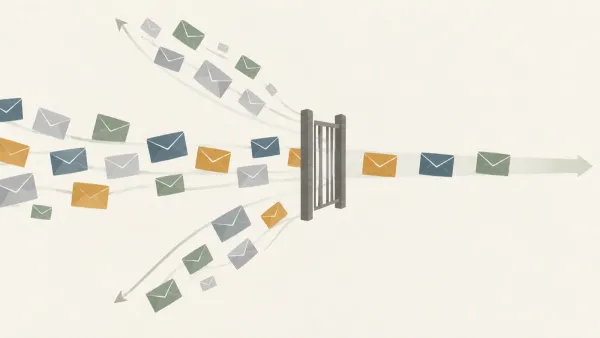
Twenty years of falling off the GTD wagon and climbing back on

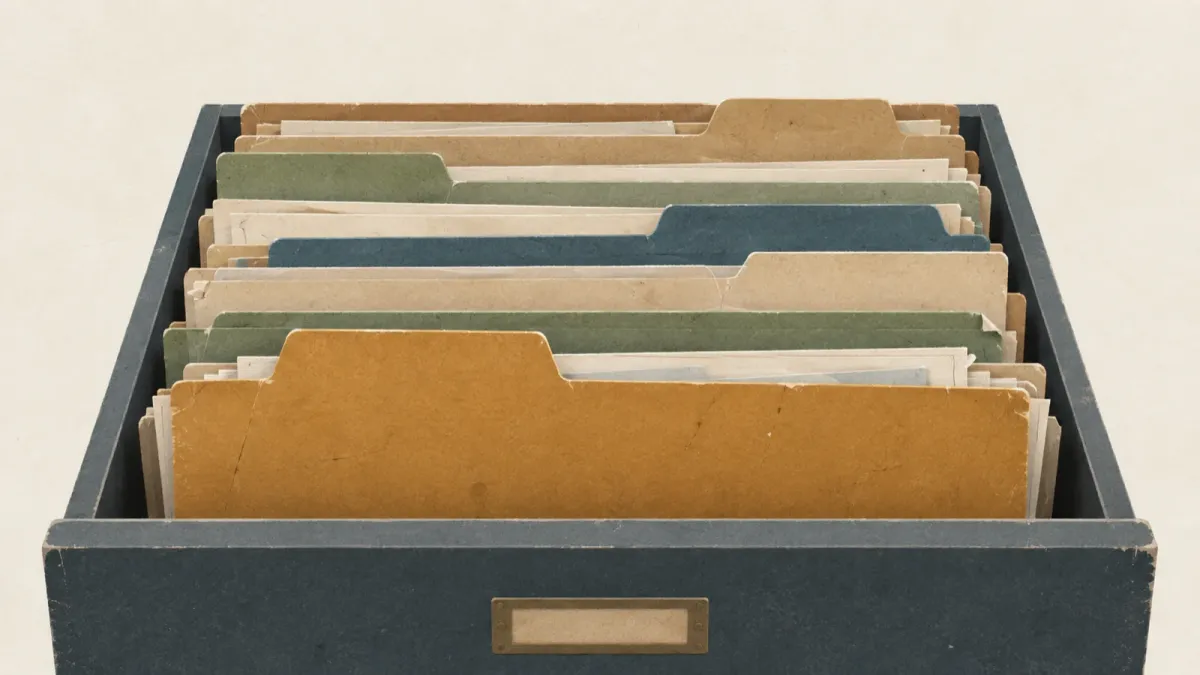

At my most committed, I carried forty-three cardboard folders around with me.
Thirty-one for the days of the month, twelve for the months of the year. It's the tickler file from David Allen's original Getting Things Done, popularised by Merlin Mann's 43 Folders, and in my early consulting years I actually ran it — physically, in a bag, in real life. That's how serious I was.
I have been oscillating between full GTD and having almost fallen off the bandwagon ever since. Two decades of it. OmniFocus is where that oscillation has happened since 2008, and the interesting thing isn't that I've stayed — it's what happened when I seriously tried to leave.
The year I tried to move to Microsoft
Last year I made a genuine attempt to consolidate everything into the Microsoft universe. Not a trial, not a weekend experiment — a real migration, sustained for months, because my working life already lives in Outlook and Teams and Planner and it seemed obviously sensible to put the tasks there too.
It did not work.
The usage data from that period is almost funny. When I pulled launch counts off this machine to build the collection this post belongs to, Microsoft To Do came back with 355 launches — the second-highest count of anything I own. By the numbers it looks like one of my most-used applications. In reality it's the archaeological record of a failed experiment.
I tried Todoist again while I was at it. I tried Things. Neither clicked either. And I notice I can't give you a crisp technical reason for any of it, which is itself the honest answer: task managers are not really a features question once they clear a basic bar. They're a question of whether the shape of the thing matches the shape of your head.
OmniFocus matches mine. Everything personal and every work project is back in it, and I feel at home there in a way I didn't anywhere else.
What keeps it working
Quick entry, bound somewhere nothing can steal it. Capture has to cost nothing or you stop doing it, and the moment you stop capturing, the whole system quietly dies. Mine lives on Hyper + A — caps lock and the key right next to it. It used to be control-space or option-space, and I moved it deliberately, because those bottom-of-the-keyboard shortcuts have become fiercely contested territory now that every new AI tool wants one. Up behind the hyper key, nothing fights me for it.
It doesn't mind that I fall off. This is the underrated part. Twenty years of oscillation means I've abandoned my own system repeatedly and come back to a review queue full of stale nonsense. OmniFocus handles that without judgement — the structure is still there when I return, and I can prune it back into shape rather than starting over. A lighter app would have needed rebuilding. This one just waits.
It goes as deep as you're currently willing to go. Defer dates, review cycles, sequential projects, perspectives — all there when I'm in an orthodox phase, all safely ignorable when I'm not. The same app serves both versions of me, which after twenty years I've decided is the actual feature.
Where it's going next, for me: the piece I'm most interested in now isn't inside OmniFocus at all. There's a community-built bridge on GitHub that lets Claude read and write my task list directly, and with my mail and calendar connected too, most of what I'm tracking and planning now passes through one place. I didn't build it — I just found it and I'm glad I did. Reminders that arrive as Planner tasks at work get pulled into the same system without me copying anything by hand.
The honest warning
OmniFocus is expensive and it is not gentle. Standard is $74.99, Pro is $149.99, or you can subscribe at $99.99 a year. There's a fourteen-day trial and you will need it.
It also has a real reputation for being heavy, and the reputation is earned. If you want a task manager you can understand in an afternoon, this isn't it — Things is friendlier, and I say that as someone it didn't work for. OmniFocus rewards people who are prepared to have a system and maintain it. If that sounds like a chore rather than a relief, believe your instinct.
The verdict
Eighteen years on the same task manager, across every professional phase I've had, including a serious and well-funded attempt to replace it with something my employer already pays for. It survived that. I don't think I can give it a stronger recommendation than the fact that I tried to leave and came back.
Part of the Mac software I actually use — nineteen tools, one write-up a week. Put together with AI, based entirely on my own use and opinions.